
Client Alert – Energy Interventions in CEE & SEE: Why Disputes Are Likely to Follow
18. 03. 2026
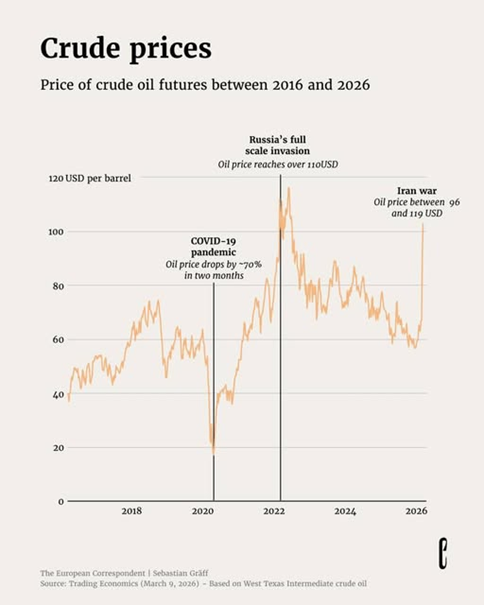
Governments across Central and South‑Eastern Europe are responding to renewed oil and gas market volatility with price controls, export restrictions, fiscal interventions and emergency stock releases. While politically expedient, these measures materially increase legal and dispute risk for energy companies, traders, refiners and investors operating in the region.
What you will learn from this article
- What types of energy market interventions are being introduced across CEE and SEE
- Why these measures increase dispute risk for investors and energy companies
- Which legal claims are most likely to arise (contractual, regulatory, treaty-based)
- What steps companies should take now to mitigate exposure
Source: https://europeancorrespondent.com/en/r/the-iran-war-is-pushing-up-your-bills
Snapshot of Key Measures
- Hungary:
– Retail price caps for petrol and diesel, combined with restrictions based on foreign licence plates;
– A de facto oil export ban subject to ministerial permission;
– Excise tax on fuel
– Mandatory release of large volumes from strategic petroleum reserves. - Croatia:
– Temporary price caps on gasoline and diesel to prevent pass‑through of global price increases. - Serbia:
– Temporary ban on oil and fuel exports;
– Significant excise duty reductions on oil derivatives. - Slovenia:
– Excise tax reductions to dampen retail price increases under a regulated pricing regime. - Slovakia:
– Government‑directed price “self‑regulation” by the Slovnaft refinery;
– Use of strategic reserves while monitoring geopolitical developments.
Several other jurisdictions (Bosnia and Herzegovina, Montenegro) are openly considering similar steps.
Why This Creates Immediate Dispute Risk
These interventions strike at the core legal and economic assumptions underpinning energy contracts and investments in the region.
- Contractual disruption across borders
Export bans, licensing requirements and price caps override negotiated supply, offtake and trading arrangements. This predictably leads to disputes over force majeure, hardship, suspension of performance and termination – often across multiple jurisdictions. - Regulatory shock without compensation
Price caps and tax measures are typically introduced with little notice and without compensation mechanisms, forcing private actors to absorb losses. This is a classic trigger for litigation against counterparties and administrative challenges against the state. - Discrimination and market access concerns
Measures that differentiate between domestic and foreign participants—such as Hungary’s protected pricing regime – raise heightened risks under EU law, Energy Community rules and investment treaties, particularly where cross‑border trade is restricted. - Investment protection exposure
Mandatory stock releases, prolonged price regulation and export controls can undermine legitimate expectations and long‑term profitability of refineries, storage facilities and distribution networks. “Temporary” measures that are extended or repeatedly reintroduced are especially vulnerable to investment arbitration claims. - Cascading disputes along the value chain
A single intervention often triggers knock‑on disputes: supply contracts, financing arrangements, shareholder issues and logistics claims. What begins as a consumer‑price measure can rapidly escalate into multi‑party, multi‑forum disputes. - Political incentives vs. legal risk
In the CEE/SEE context, governments often prioritise short‑term price stability over legal certainty. Claims tend to crystallise later—frequently under a different political administration—by which time positions are entrenched, and exposure has grown.
What this means for management
Companies active in the region should assume that dispute risk is not hypothetical. Boards should ensure that:
- contracts and compliance frameworks are stress‑tested against emergency regulation;
- potential claims are identified early and evidence preserved; and
- dispute resolution strategies (courts, arbitration, treaty claims) are assessed in parallel with regulatory engagement.
By Dalibor Valinčić, Dániel Dózsa and Maria Paschou
Frequently Asked Questions:
What types of disputes can arise from energy price controls and export bans?
Energy interventions can trigger contractual disputes (force majeure, hardship, termination), regulatory challenges, and investment treaty claims, particularly where measures affect cross-border trade or long-term investments.
Can energy companies bring claims against states for these measures?
Yes. Depending on the structure of the investment, companies may pursue claims under investment treaties (ISDS), EU law, or domestic administrative law.
Are temporary measures less risky from a legal perspective?
Not necessarily. Measures that are repeatedly extended or maintained over time may increase exposure, particularly where they undermine legitimate expectations.
What should companies do now?
Companies should review contracts, assess dispute resolution options, preserve evidence, and evaluate potential claims early.